Crawl Space Experts

Efficient Crawlspace Encapsulation Graham

Improve air quality in your Graham home and reduce radon exposure with our expert crawlspace encapsulation, providing a safer and healthier environment.
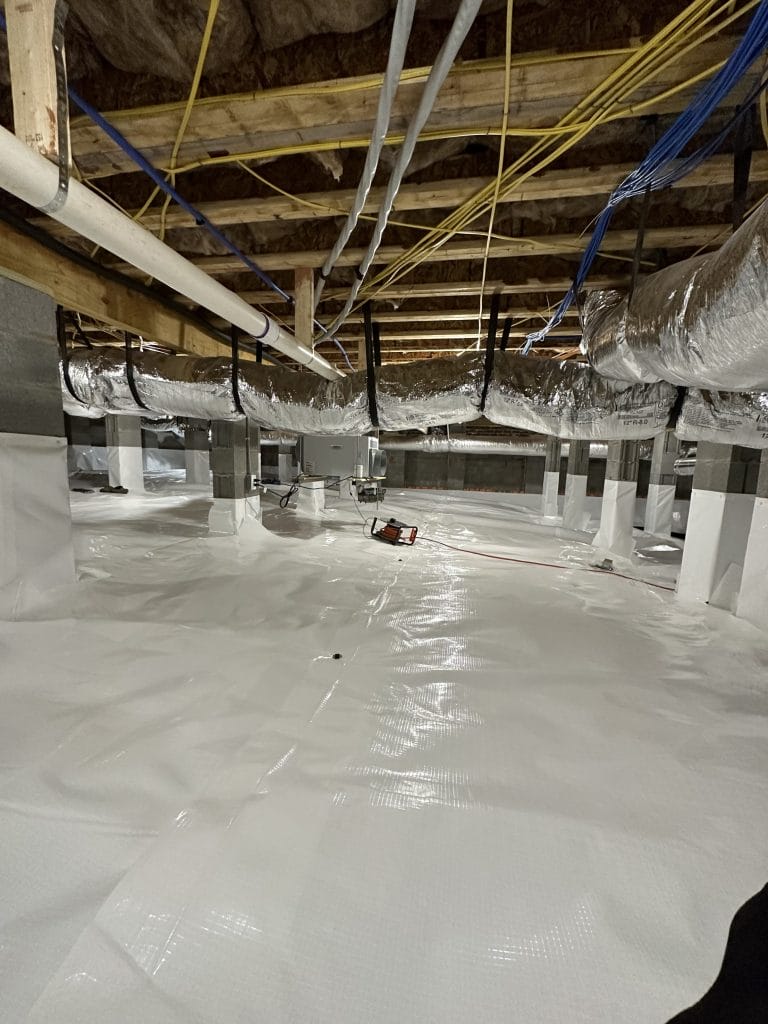
Crawlspace Encapsulation with Vapor Barrier Installation
Comprehensive Crawlspace Encapsulation Services

Crawlspace Encapsulation: Enhance Your Property

Our crawlspace encapsulation services in Graham utilize durable vapor barriers and advanced sealing techniques to shield your home from moisture, mold, and radon gas infiltration. By effectively sealing the crawlspace, we prevent moisture buildup and mold growth, protecting the structural integrity and value of your property over time.

This comprehensive approach improves indoor air quality by reducing the entry of radon and other pollutants and contributes to a healthier living environment for your family.

Protect Your Graham Property from Structural Damage

Why Choose Us

When dealing with the prevention of moisture, mold, and radon gas buildup in your property’s crawlspace, True Air Technologies is your best option!

Expert Team

Our team has extensive knowledge and experience in crawlspace encapsulation. Each project is customized specifically to your property’s design.

Innovative Techniques

Our technicians employ state-of-the-art techniques to ensure high-quality encapsulation. Using the best practices, we can provide durable and efficient solutions that effectively seal your crawlspace.

Comprehensive Service

Our team offers a complete service package, from initial assessment to installation and follow-up maintenance. We will make sure your crawlspace is free of any potentially dangerous hazards.

Crawlspace Encapsulation and Radon Awareness in Graham

The Importance of Encapsulation in Graham

Graham is subject to humid conditions that can exacerbate moisture issues indoors. Crawlspace encapsulation is vital for controlling these conditions and reducing radon exposure effectively.

Radon Risks in Graham

Graham’s geological features may lead to higher radon levels, posing significant health risks. Regular monitoring and effective encapsulation solutions are necessary for a safe living environment.

Community Education and Prevention Efforts

The Graham community has made strides in raising awareness about radon risks and the essential nature of crawlspace encapsulation. Educational programs empower residents to take preventive measures for healthier, safer homes.

Testimonials

What Customers Say About Our Graham Crawlspace Encapsulation Services

  • True Air Technologies did great on our crawlspace encapsulation and radon mitigation. They addressed our high radon and humidity levels by installing a dehumidifier and ensuring we understood how to monitor the system. Highly recommended!
    Larry Needham
  • True Air Technologies excelled in encapsulating our crawlspace and efficiently addressing high humidity. The team provided detailed plans and added extra lighting without charge. Their professional approach exceeded expectations. Can’t recommend them enough!
    Trax Tiger
  • After our crawl space encapsulation, True Air Technologies dropped our radon levels significantly during a one-day installation. Their professional service left us very satisfied with the results.
    Chuck Hubbuch

Top Questions About Graham Crawlspace Encapsulation

Yes, when it is built to meet the conditions in the applicable residential code. The International Residential Code allows unvented crawl spaces if listed requirements are met, including a ground vapor retarder and a planned method for controlling moisture, such as a continuously operated exhaust, a supply of conditioned air, or dehumidification. Other details, such as wall insulation and air sealing, may also apply. Encapsulation is a common way to create that closed space in an existing house, but simply closing the vents without the rest of the system does not meet the intent of those provisions. A contractor should design the job to the code path that applies to the home and should not treat vent covers as a complete solution.

A thorough inspection should cover standing water and drainage, gutters and grading, the condition of the existing vapor barrier, signs of wood damage, the state of insulation and ducts, plumbing leaks, access, and any sump or interior drain. It should also include a check of combustion appliances if they could be affected by a tighter space, and a radon test of the lowest livable level if one has not been done recently. Those findings determine whether drainage repairs or drying have to come first, what the liner and humidity-control plan should include, and whether radon mitigation should be designed at the same time. Skipping this step is how a liner ends up installed over problems it cannot solve.

Waterproofing is about stopping or redirecting liquid water, often with exterior drainage, interior drains, sump pumps, or foundation coatings. Encapsulation is about sealing the crawl space from soil vapor and outdoor air and then controlling humidity inside that closed space. The two can work together, but they are not the same job. If liquid water is entering the crawl space, that water problem should be corrected first; a vapor barrier alone will not keep a flooded space dry. Once bulk water is under control, encapsulation can manage the remaining dampness and humidity. A clear inspection should separate drainage repairs from the liner, vent closure, and dehumidifier so each part of the work is doing the job it is meant to do.

It can, when the job is done correctly, but no contractor should promise a specific savings figure for a given house. The U.S. Department of Energy notes that converting a vented crawl space to a properly closed, unvented crawl space can reduce utility costs and improve comfort, especially when ducts or mechanical equipment are in that space. ENERGY STAR likewise reports that closed crawl spaces in temperate humid climates can use less energy than traditional wall-vented designs. Results vary with insulation, air sealing, equipment, and how the house is used. Encapsulation helps by keeping outside air and ground moisture out of the crawl space so the floor above is easier to keep comfortable. Ask for a site-specific assessment rather than a one-size-fits-all energy claim.

Industry Affiliations & Certifications

True Air Technologies is certified in radon measurement and mitigation. We display credentials from the National Radon Proficiency Program (NRPP), the National Radon Safety Board (NRSB), and AARST. Owner Merritt Gantt completed advanced training at Kansas State University, has been a Kansas State University instructor since 2023, and is a certified Soil Gas Mitigation Compliance Inspector.

NRPP — National Radon Proficiency Program
NRSB Certified — National Radon Safety Board
AARST — Radon Professionals Saving Lives
MFMT certificate
MFM certificate
RRNC certificate
ARP certificate

Serving North Carolina and South Carolina

Not sure if we serve your area? Give us a call!

Our Service Area

We proudly service businesses and homeowners in the Carolinas, including Columbia, Spartanburg, Greenville, and areas nearby.

Protect Your Home With Our Crawlspace Encapsulation Services

Ensure your crawlspace is safe from the buildup of moisture, mold, and radon gas by contacting True Air technologies for crawlspace encapsulation in South Carolina and Western North Carolina today.