Crawl Space Experts

Dependable Crawlspace Encapsulation Gaston

Boost air quality in your Gaston home and limit radon risks with expert crawlspace encapsulation, ensuring a safer and healthier living environment.
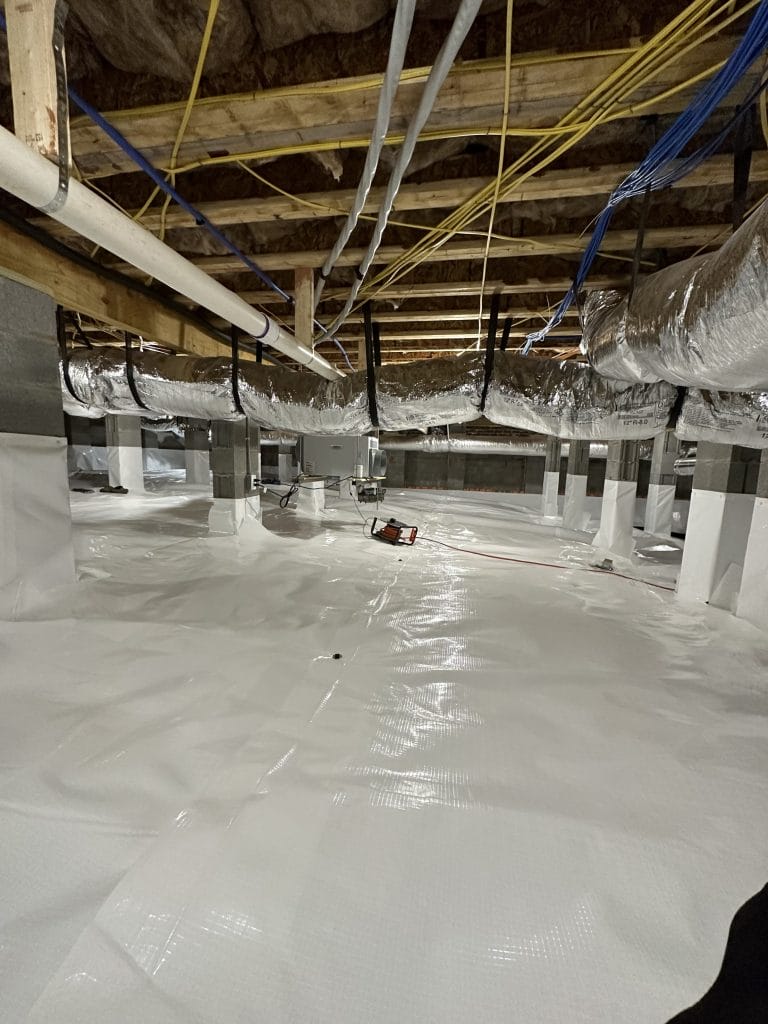
Crawlspace Encapsulation with Vapor Barrier Installation
Comprehensive Crawlspace Encapsulation Services

Crawlspace Encapsulation: Improve Your Home

Our crawlspace encapsulation services in Gaston employ durable vapor barriers and advanced sealing techniques to protect your home from moisture, mold, and radon gas infiltration. By effectively sealing the crawlspace, we prevent moisture buildup and mold growth, maintaining your home's structural integrity and preserving its value over time.

This comprehensive approach improves indoor air quality by reducing the entry of radon and other pollutants and contributes to a healthier living environment for your family.

Protect Your Gaston Property from Structural Damage

Why Choose Us

When dealing with the prevention of moisture, mold, and radon gas buildup in your property’s crawlspace, True Air Technologies is your best option!

Expert Team

Our team has extensive knowledge and experience in crawlspace encapsulation. Each project is customized specifically to your property’s design.

Innovative Techniques

Our technicians employ state-of-the-art techniques to ensure high-quality encapsulation. Using the best practices, we can provide durable and efficient solutions that effectively seal your crawlspace.

Comprehensive Service

Our team offers a complete service package, from initial assessment to installation and follow-up maintenance. We will make sure your crawlspace is free of any potentially dangerous hazards.

Crawlspace Encapsulation and Radon in Gaston

Importance of Encapsulation in Gaston

Gaston faces humid conditions that can lead to moisture issues within homes, making crawlspace encapsulation crucial for maintaining air quality and reducing radon exposure.

Radon Levels and Risks in Gaston

The soil in Gaston can contribute to elevated radon levels, posing health risks to residents. Regular radon testing and effective encapsulation are essential for ensuring home safety.

Educational Initiatives and Community Involvement

Gaston has established strong initiatives to raise awareness about radon risks and the benefits of crawlspace encapsulation. Through these educational efforts, residents are empowered to make informed decisions for healthier homes.

Testimonials

What Customers Say About Our Gaston Crawlspace Encapsulation Services

  • True Air Technologies did great on our crawlspace encapsulation and radon mitigation. They addressed our high radon and humidity levels by installing a dehumidifier and ensuring we understood how to monitor the system. Highly recommended!
    Larry Needham
  • True Air Technologies excelled in encapsulating our crawlspace and efficiently addressing high humidity. The team provided detailed plans and added extra lighting without charge. Their professional approach exceeded expectations. Can’t recommend them enough!
    Trax Tiger
  • After our crawl space encapsulation, True Air Technologies dropped our radon levels significantly during a one-day installation. Their professional service left us very satisfied with the results.
    Chuck Hubbuch

Top Questions About Gaston Crawlspace Encapsulation

Submembrane suction is a radon mitigation method for crawl spaces. A sealed membrane is placed over the soil, and a fan and vent pipe draw soil gas from under that membrane and exhaust it outdoors. The EPA identifies this approach as a reliable way to reduce radon in homes with crawl spaces. The membrane used for mitigation is similar in idea to an encapsulation liner, but the fan, piping, and discharge are what make it a mitigation system. Encapsulation alone, without that active suction, is not a substitute; the EPA does not recommend sealing alone to reduce radon. If a radon test is elevated, submembrane suction can be installed on its own or combined with a full encapsulation and humidity-control plan.

Not if standing water or an active leak is still present. The source of the water should be found and corrected, and the space should be able to stay reasonably dry before a sealed liner and closed vents are installed. Encapsulating over puddles, a failing sump, or a plumbing leak simply closes a wet environment, which can leave framing and insulation damp. After drainage and repairs, the soil can be prepared, a continuous vapor barrier installed, and humidity-control equipment added. If wood or insulation has already been soaked, those materials should be evaluated before they are sealed in. A short delay to dry and repair the space is a better start than a liner laid over water.

Yes, and that is often a good reason to close the space. Ducts in a vented crawl space sit in an unconditioned, sometimes wet environment, which can waste energy and allow moisture to collect on the ductwork. The U.S. Department of Energy notes that a properly closed crawl space can reduce utility costs and improve comfort, especially when ducts or mechanical equipment are in that space. Encapsulation should still start with drainage and a sealed liner, and the ducts should be inspected for leaks, rust, or disconnected joints. Closing the space does not repair damaged ducts on its own. A site-specific plan can address the liner, humidity control, and duct condition together.

A damp, vented crawl space can contribute odors, humidity, and soil gas to the rooms above, because air in the house is often drawn upward from lower levels. Closing the space with a sealed liner, sealed vents, and humidity control is meant to reduce that movement and make the indoor environment more stable. Encapsulation is still not a radon mitigation system; the EPA does not recommend sealing alone to reduce radon, and the home should be tested. It is also not a substitute for fixing combustion-appliance backdrafting, plumbing leaks, or other indoor-air problems. When it is designed correctly, the main indoor-air benefit is a drier, cleaner crawl space with fewer paths into the living area.

Industry Affiliations & Certifications

True Air Technologies is certified in radon measurement and mitigation. We display credentials from the National Radon Proficiency Program (NRPP), the National Radon Safety Board (NRSB), and AARST. Owner Merritt Gantt completed advanced training at Kansas State University, has been a Kansas State University instructor since 2023, and is a certified Soil Gas Mitigation Compliance Inspector.

NRPP — National Radon Proficiency Program
NRSB Certified — National Radon Safety Board
AARST — Radon Professionals Saving Lives
MFMT certificate
MFM certificate
RRNC certificate
ARP certificate

Serving North Carolina and South Carolina

Not sure if we serve your area? Give us a call!

Our Service Area

We proudly service businesses and homeowners in the Carolinas, including Columbia, Spartanburg, Greenville, and areas nearby.

Protect Your Home With Our Crawlspace Encapsulation Services

Ensure your crawlspace is safe from the buildup of moisture, mold, and radon gas by contacting True Air technologies for crawlspace encapsulation in South Carolina and Western North Carolina today.